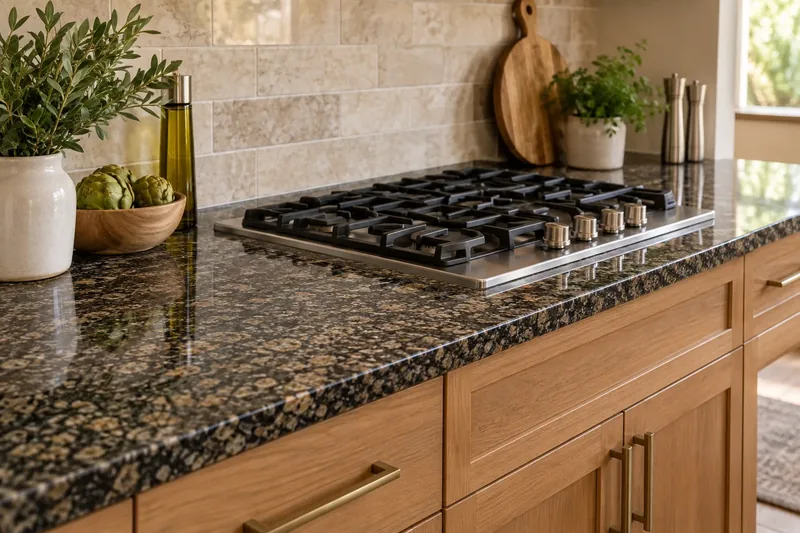
- Granite
- An igneous stone quarried in large blocks and sawn into slabs. In a Hendersonville kitchen it takes heat from a pan, resists scratches from daily prep, and needs a sealer reapplied every year or two to keep stains out.
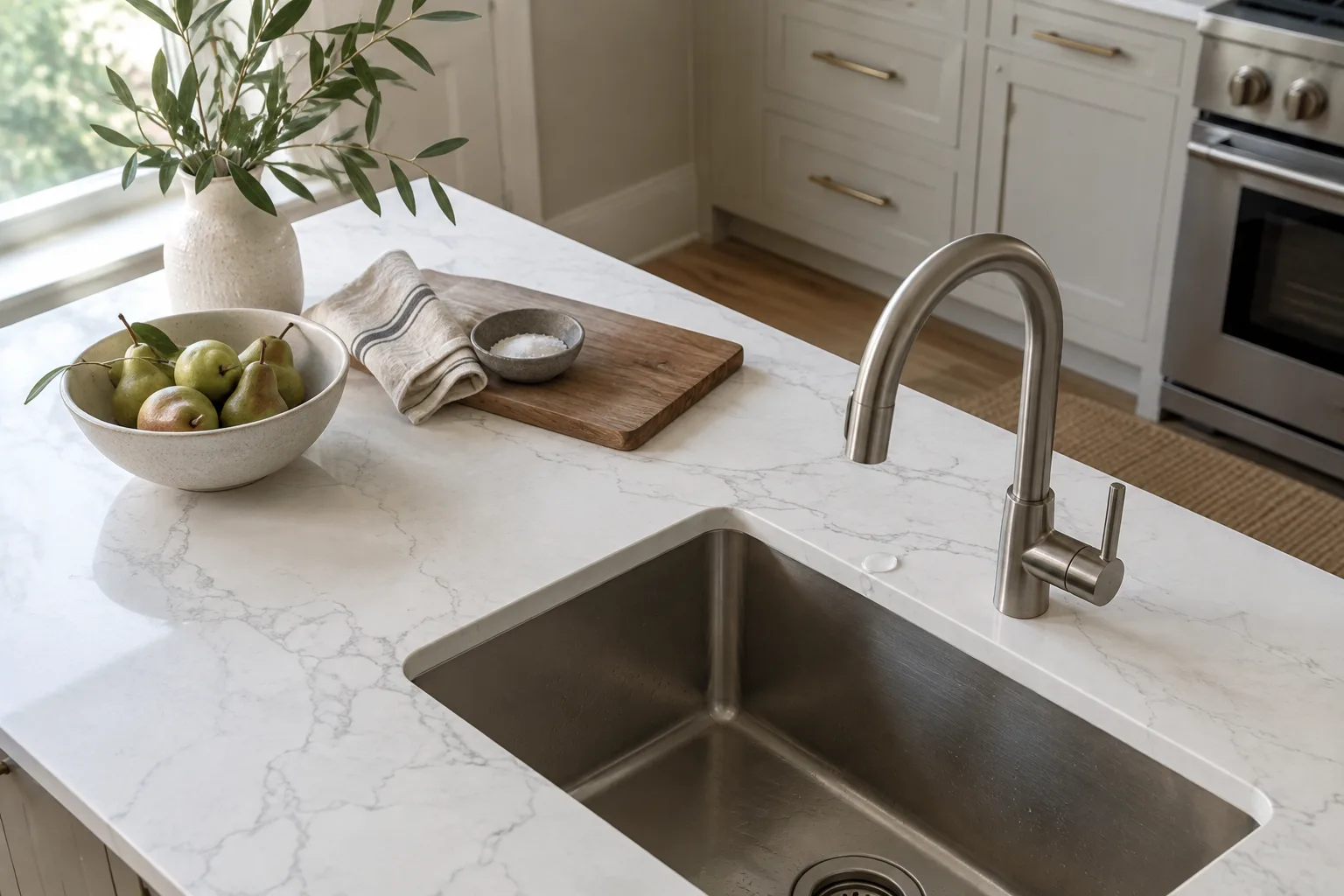
- Engineered Quartz
- A slab made from crushed quartz bound with resin and pigment. The color runs evenly through the piece and it never needs sealing, but it should stay out of direct sun and wants a trivet under hot cookware.
- Templating
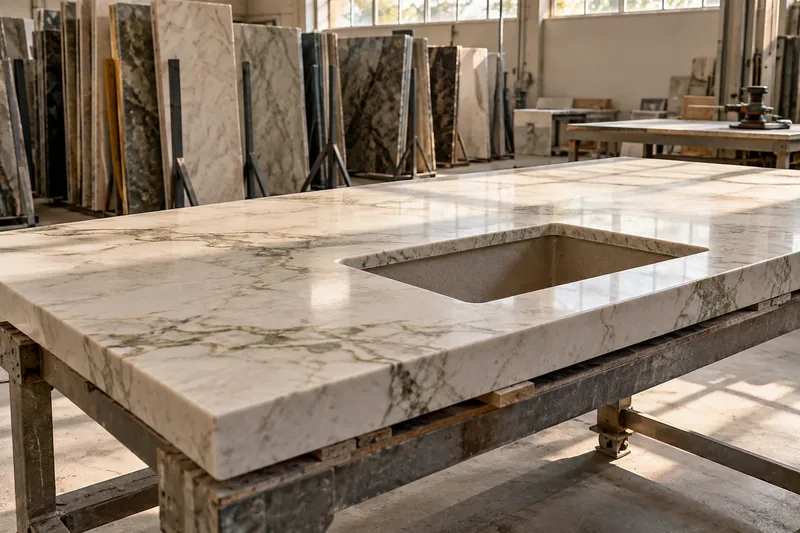
- Measuring the installed cabinets with rigid templates or a digital scanner after they are level and fixed. The template, not a tape measure, is what the shop cuts the slab to, so walls that are out of square are captured.
- Edge Profile
- The shape cut into the exposed front of a countertop, such as eased, bevel, bullnose or ogee. It changes how the top looks, how it feels against a hip, and how well the corner stands up to a knock.
- Backsplash
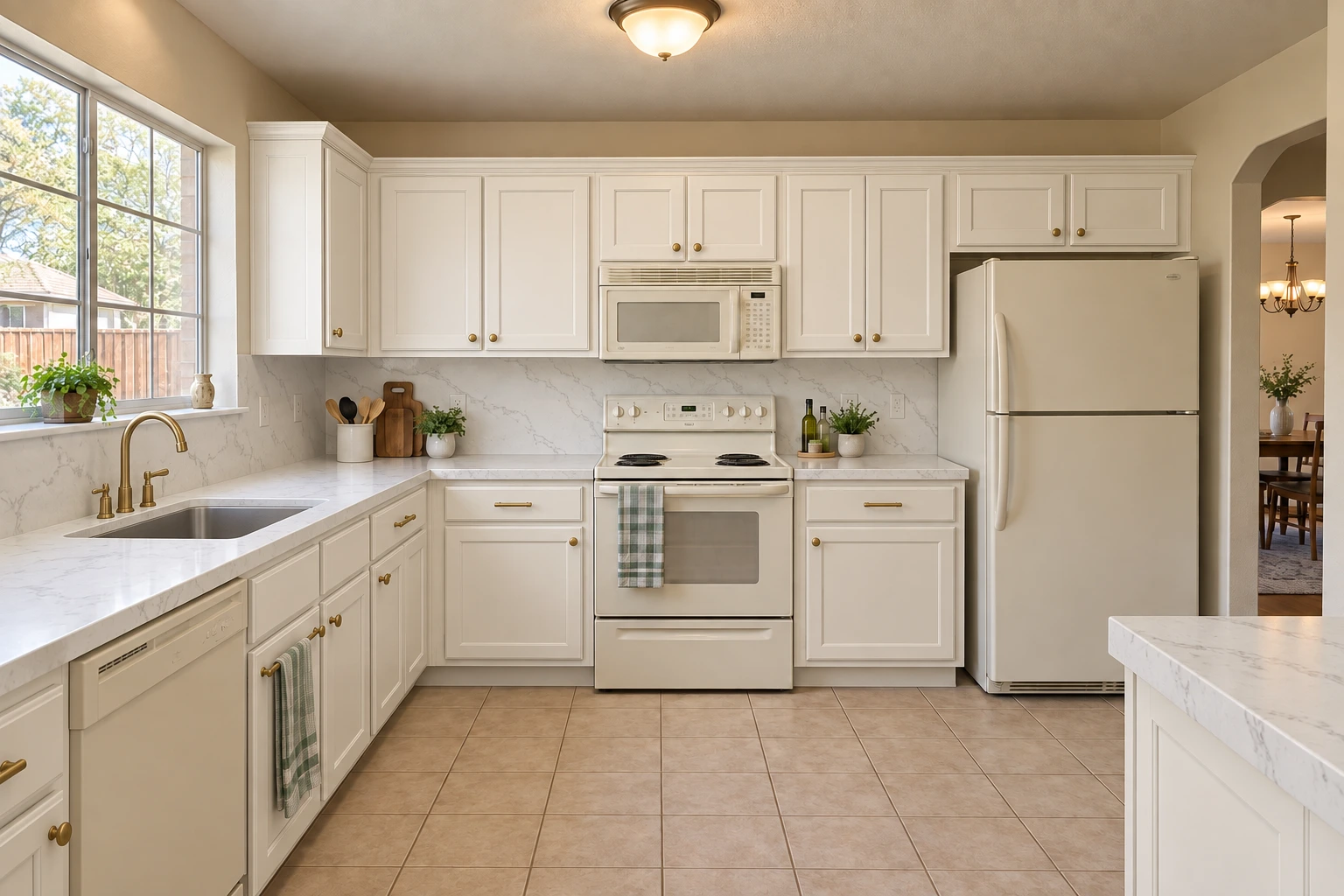
- The wall surface just above a countertop that catches water and splatter. It can be a short strip cut from the same slab, tile set by a tile setter, or a full-height slab that runs up to the upper cabinets.
- Solid Surface
- A non-porous sheet material made of acrylic or polyester resin and mineral filler. Seams can be joined so they almost disappear, and light scratches can be sanded out, which is why clinics and offices often choose it.
- Seam
- The joint where two pieces of a countertop meet when a run is longer than one slab or turns a corner. A good seam is placed where the pattern reads best, kept tight, and filled with color-matched epoxy.
- Marble
- A metamorphic stone formed from limestone, prized for soft veining and a cool surface for baking. It etches when acids like lemon juice or wine sit on it, so many owners choose a honed finish that hides the marks.
- Stone Sealer
- A penetrating liquid that protects natural stone such as granite, marble, quartzite or soapstone by soaking into its pores and slowing how fast oils and liquids can stain. It wears with cleaning, so a simple water-drop test shows when it is time to reapply.
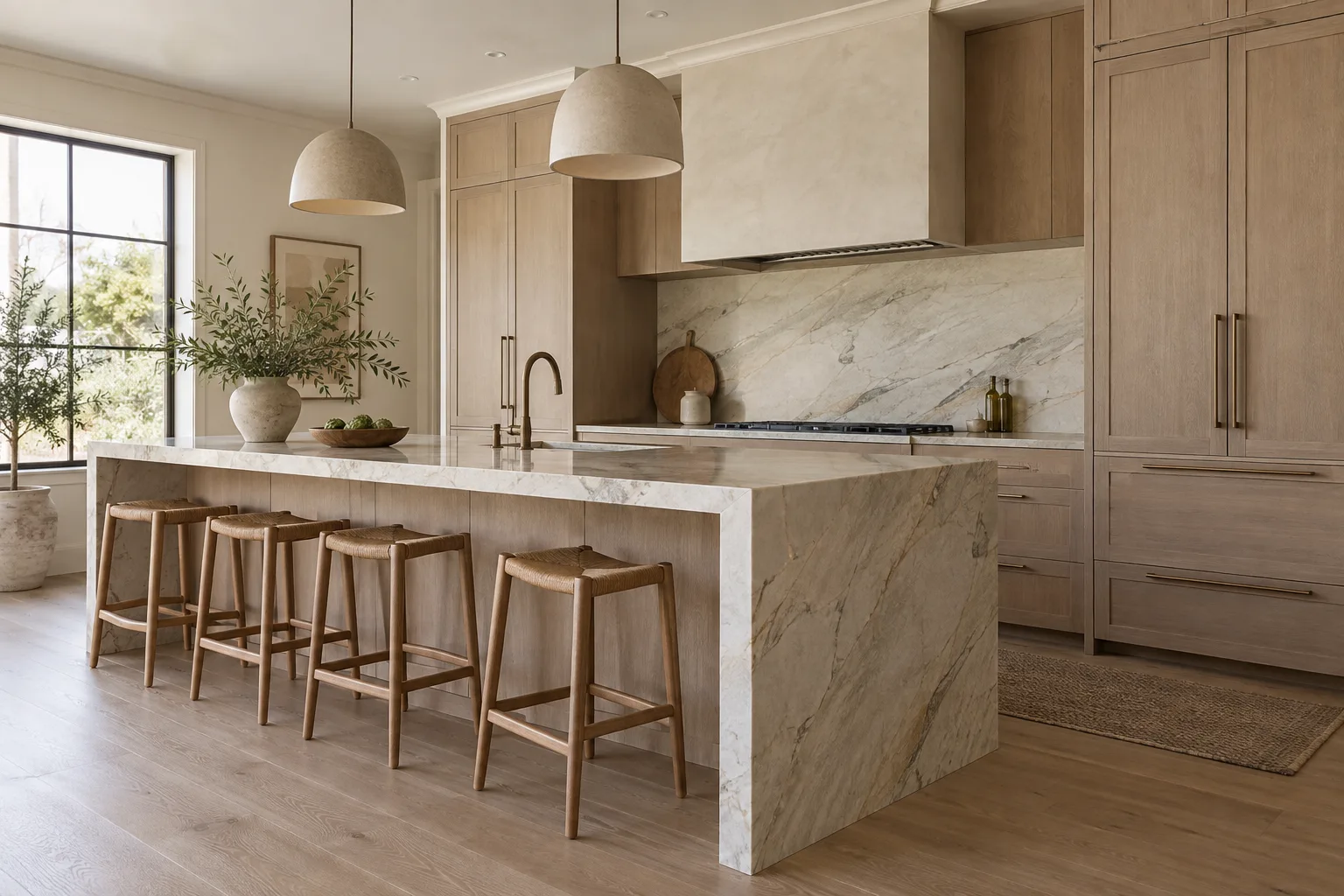
- Waterfall Edge
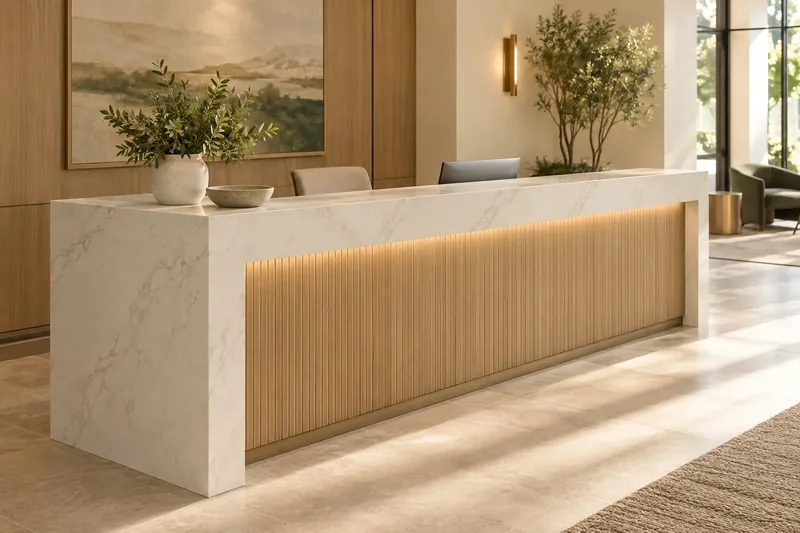
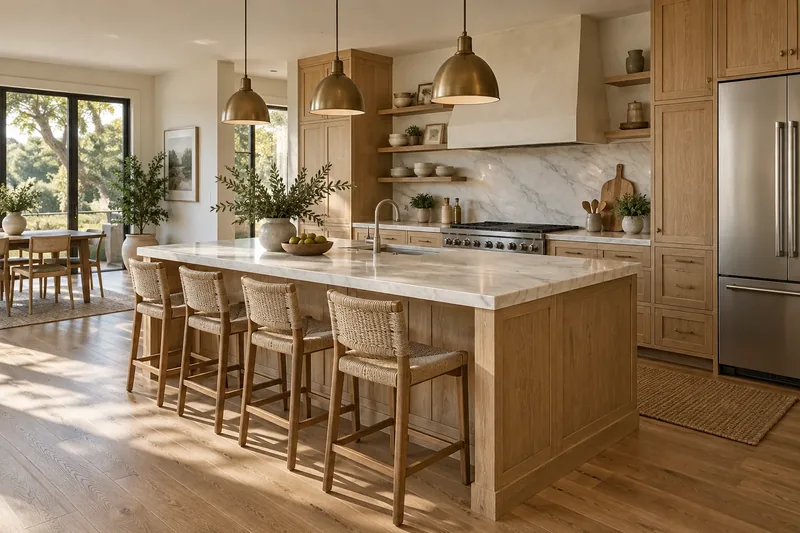
- A design where the countertop turns down at the end of an island or run and continues to the floor as a matching vertical panel. The two pieces are mitered so the veining flows around the corner without a break.
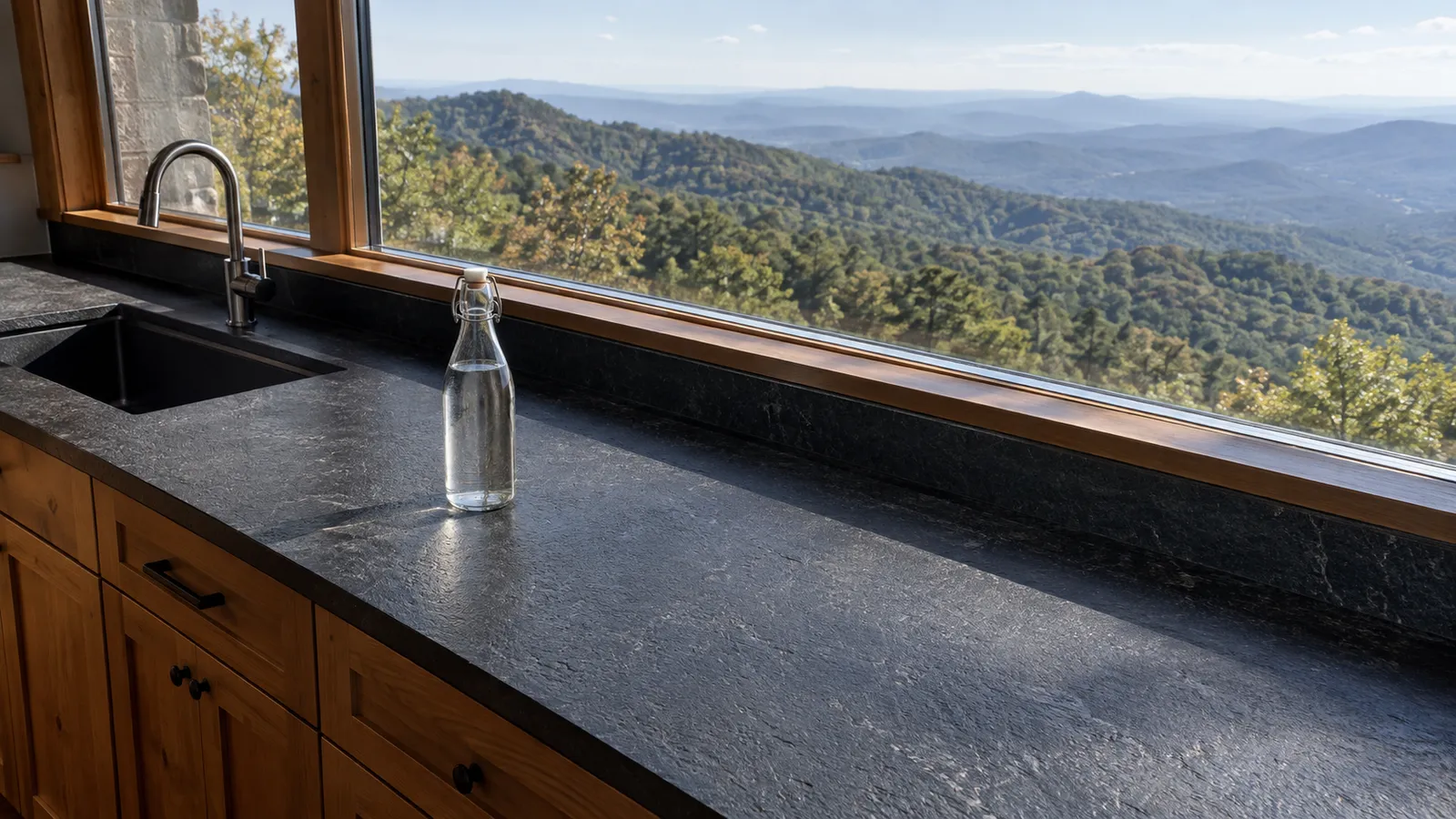
- Soapstone
- A soft, dense metamorphic stone rich in talc. It does not stain or etch, shrugs off heat, and darkens to a deep charcoal when oiled, though its softness means small scratches show and can be rubbed out.
- Bookmatching
- Laying two consecutive slabs cut from the same block side by side so their veining mirrors like the pages of an open book. It is common on waterfall islands and full-height backsplashes where the pattern is on display.
- Vanity Top
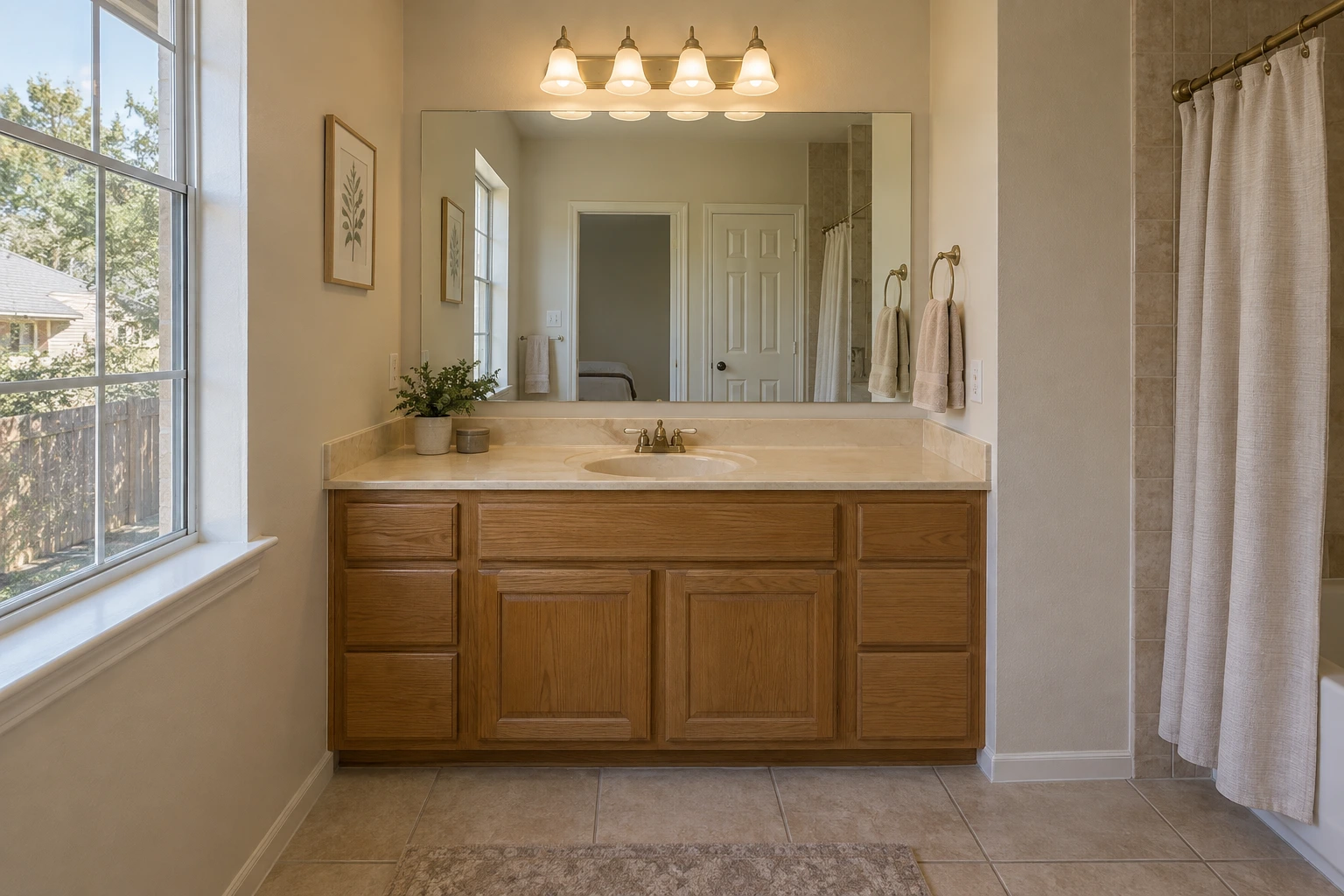
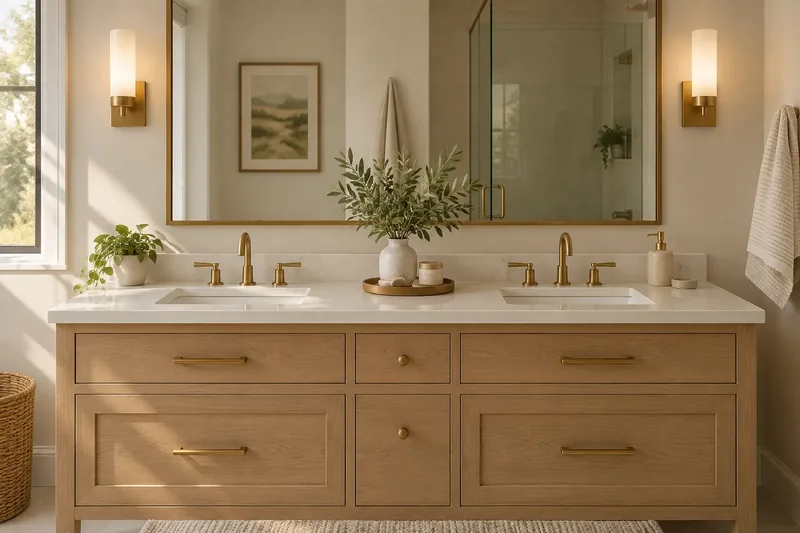
- The countertop on a bathroom vanity cabinet, usually cut from a remnant or a smaller slab. It is drilled for the faucet and set with an undermount or vessel sink, and its backsplash is sized to the wall behind it.
- Quartzite
- A natural metamorphic rock formed when sandstone is fused under heat and pressure. It is harder than granite and holds up to heat and knives, but it still needs sealing, and some stones sold as quartzite are really softer marble.
- Undermount Sink
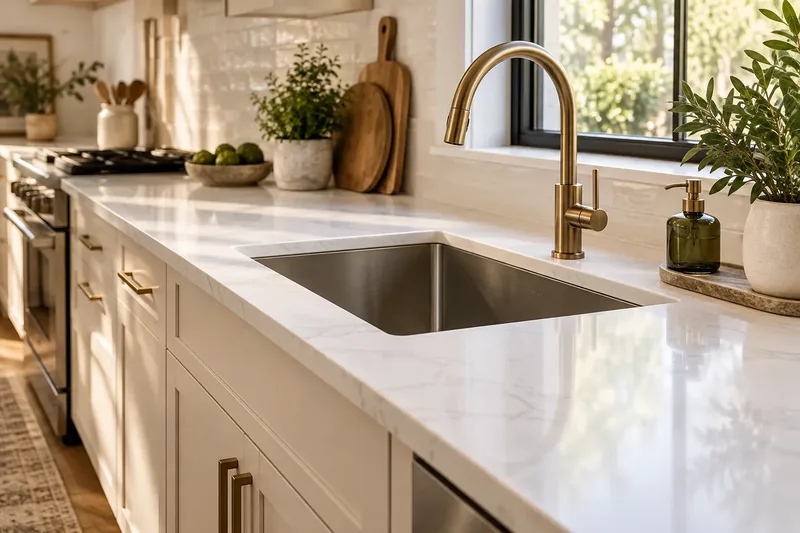
- A sink mounted under the countertop so the polished stone edge drops straight into the bowl. Crumbs wipe in without catching on a rim, and the sink is held with clips and epoxy and then sealed with silicone.