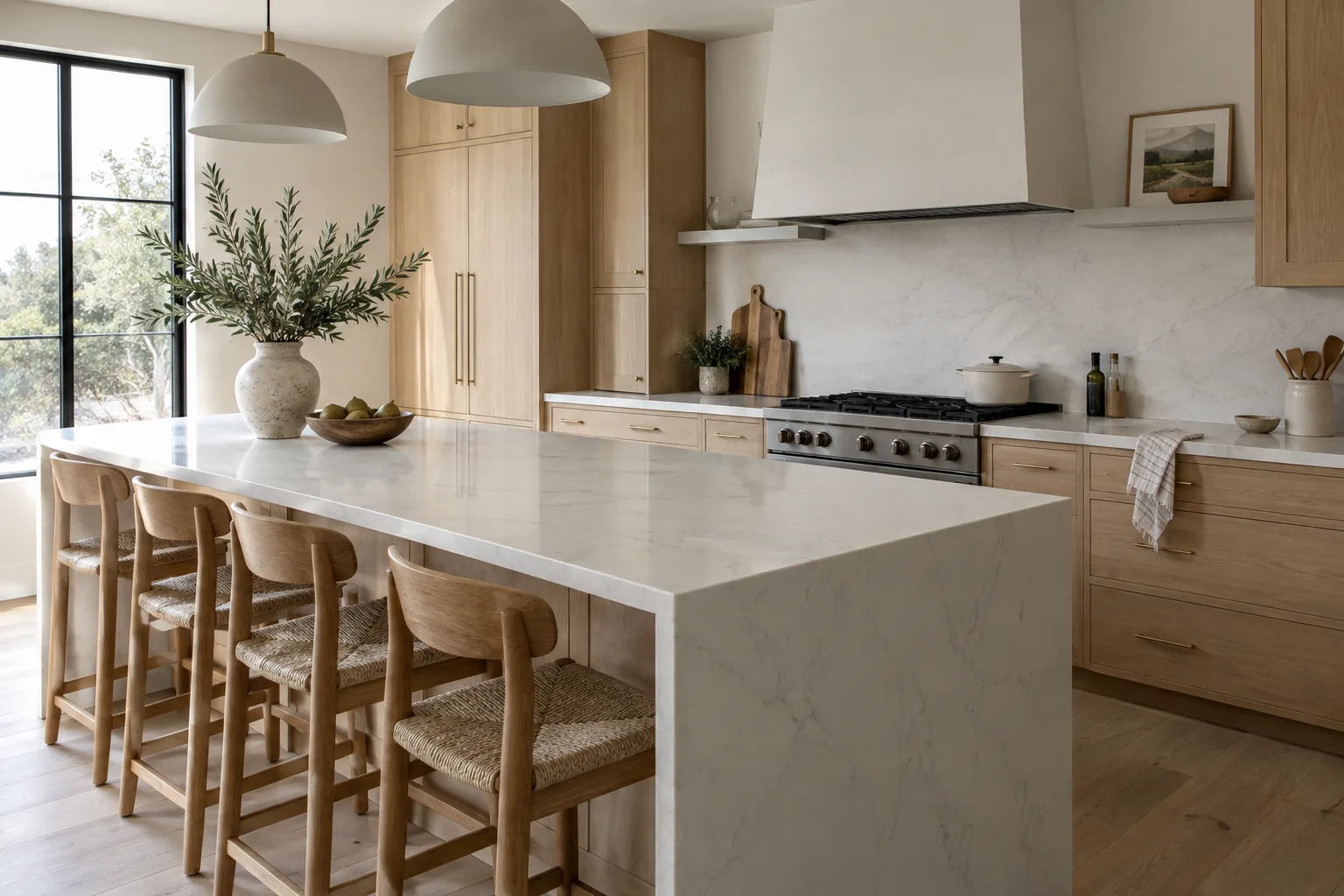
Single bowl
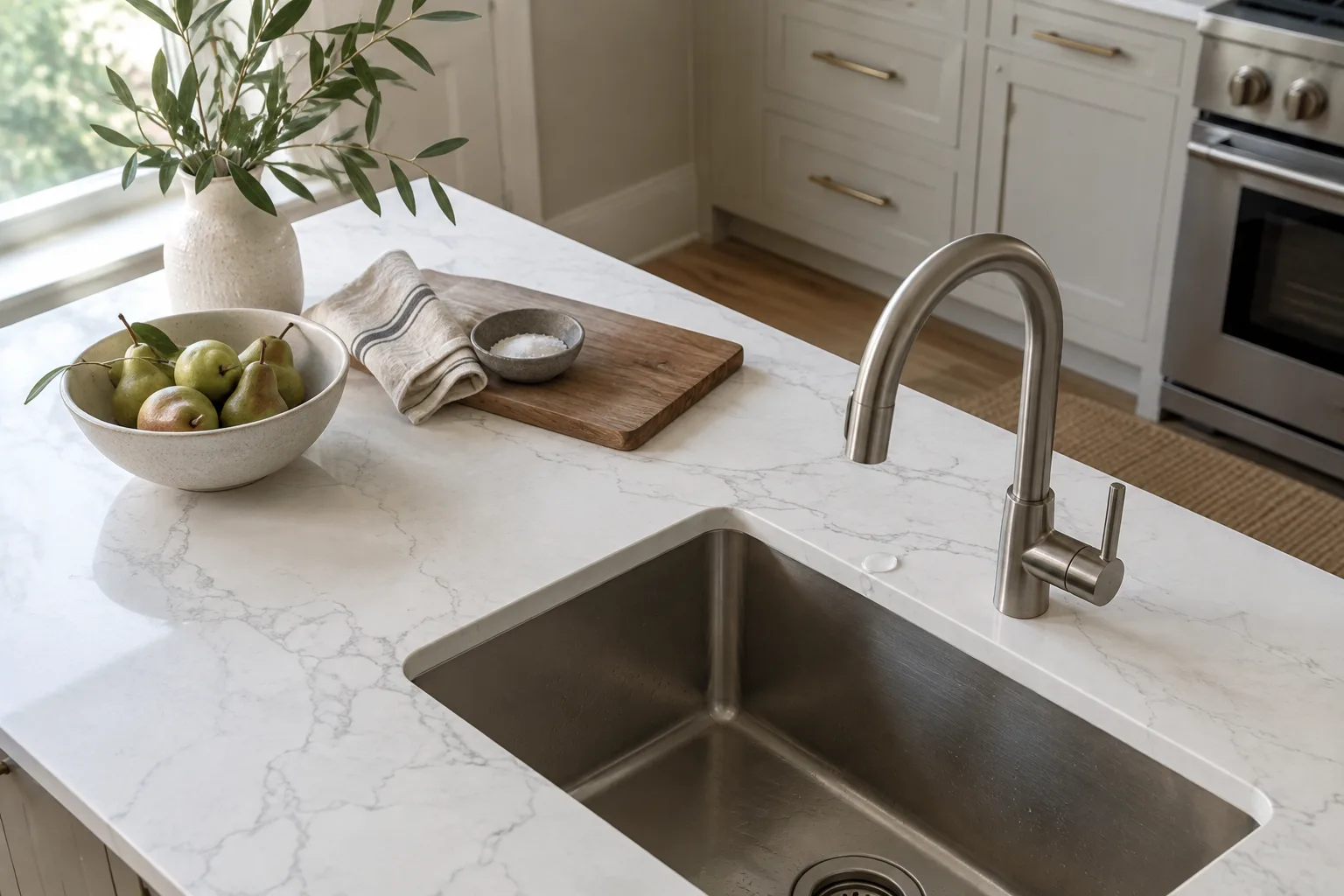
A large basin that suits big pots and sheet pans. It needs one wide opening and good support on both sides of the sink.

Henderson Custom Countertops provides undermount sink cutouts & installation in Hendersonville, NC. We fabricate the opening in the shop from your sink's own template, polish the exposed edge, and bond the basin from below so the stone and the sink work as one surface.
An undermount sink hangs below the stone, so the cutout edge is visible and has to be polished as carefully as the rest of the top. That is the whole job in one sentence: a precise hole, a finished edge and a strong bond underneath, because a full basin of water and dishes weighs a lot.
We work with homeowners and builders in Hendersonville, Flat Rock, Laurel Park and Mills River. Bring us the sink, or the model number, and we cut to the maker's specification instead of a rough guess taken from the old opening.
Why Henderson Custom Countertops
Whoever measures your cabinets is the person accountable for the finished top.
Cutting in a shop is safer for the stone and gives a cleaner result than cutting over the cabinets. A slab laid flat on a saw table is fully supported, so the blade cannot flex it, and the cut stays clean around the corners.
On site, the same cut is made on a thin top, over an open cabinet, with dust, no water table and little room. That is where chips, cracked corners and uneven lines come from, and an undermount opening has nowhere to hide a mistake.
In the shop we do the following:
The corner radius is not just a look. Sharp inside corners concentrate stress and are the most common start of a crack, which is why we round them even when a square line seems tidier.
The reveal is the narrow ledge of sink rim you can see once the stone is in place, and it is a choice, not an accident. You can have the sink edge hidden under the stone, flush with the cut, or showing a small step.
Each option behaves differently in daily use. A negative reveal, where the stone overhangs the basin, hides the rim and looks sleek, but crumbs and water can sit in the shelf and the lip has less support. A positive reveal, where the rim shows, protects the edge and is simpler to clean. A flush reveal lines the stone with the rim and is a clean middle ground.
These are the points we settle with you:
Stainless, fireclay, cast iron and composite sinks all differ in weight and rim shape, so the model matters. We will never cut from a guess, and we check the sink in the template visit before the slab is touched.
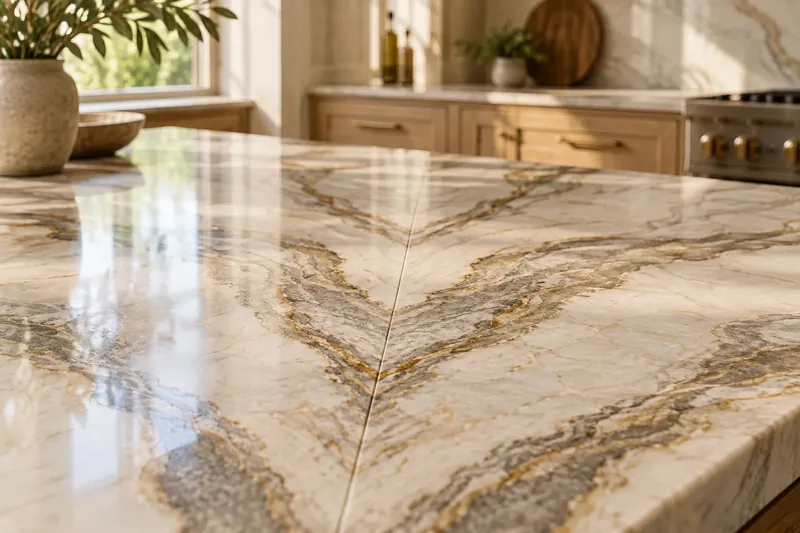
A single undermount cutout with a polished edge is usually estimated at about $150 to $400 on top of the countertop price. Large farmhouse or apron-front openings sit higher, at roughly $300 to $750, because the cut and edge work take longer. The written quote after your measure sets the real number.
The sink itself is a separate cost and often a bigger one, and some owners buy it themselves. If you do, we want it on site, or at least the exact model, before the stone is cut.
These things move the estimate:
If you want numbers early, send the sink model and the slab you have in mind, and we will give you a rough range, which stays an estimate until the measure.
An undermount sink is held up by the stone and its fasteners together, not by the cabinet, so the mounting is where lasting quality comes from. The rim is bonded to the underside of the top with a waterproof adhesive and then supported with brackets or clips fastened to the stone.
Here is what we do at install:
A cutout weakens the stone around it, so we pay attention to the narrow strip of stone in front of a sink, where a person leans. That strip needs support beneath it, and sometimes a hidden steel reinforcement is bonded to the underside of the top near the opening, especially for a wide farmhouse sink or a long span.
The water and drain connections belong to a licensed plumber, not to us. We time the install around that visit, so your kitchen is not without a working sink for days, and we can coordinate with the plumber you already trust.
Before any of it, we also check that the cabinet below is square and sturdy, because a sink that is bonded to a top sitting on a sagging base can crack the bond over time.
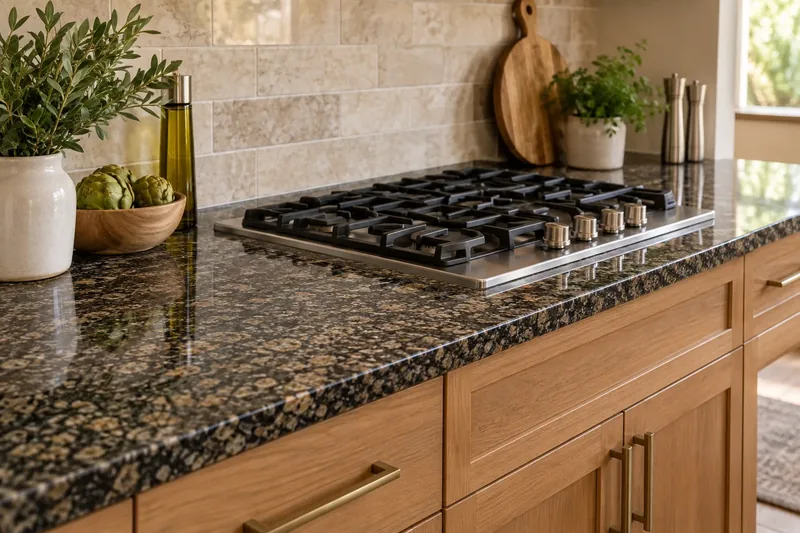
Each style changes the cutout, the support and the look of the edge, so we plan for the specific one you picked.
A large basin that suits big pots and sheet pans. It needs one wide opening and good support on both sides of the sink.
Two basins with a center divider. The cutout is bigger and the stone left over the divider is a narrow bridge, so we check strength there.
Its finished front sits exposed, so the cabinet below and the stone both have to be cut around it. The basin is heavy and wants added support underneath.
A smaller oval or rectangular basin in a vanity top, which we cut to the same standard, with the faucet holes drilled to the fixture.
Start to finish
The sink is chosen and checked before the slab is cut.
You pick the sink and the reveal, and we confirm the maker's cutout specification for that model.
We mark the opening, the faucet holes and any groove on the template and confirm them with you.
The opening is cut in the shop, the corners rounded and the exposed face polished to match the top.
We bond and bracket the sink under the stone, let it cure, and leave it ready for the plumber.
Straight answers
Not every material. Natural stone and quartz work well, and so do many solid surfaces. Laminate and tile do not, because the cut edge would be unprotected and visible.
Having it in the shop is best, and the exact model number is the minimum. Each model has its own published opening size, and a similar-looking sink can differ by enough to make the hole wrong.
We do, in our shop, before delivery. Cutting on a supported slab keeps the corners clean, and it lets us polish the exposed edge properly.
A typical cutout and polished edge is estimated at roughly $150 to $400, and a large farmhouse opening at about $300 to $750. Your written quote sets the final price.
The reveal is the strip of sink rim left visible below the stone. Showing the rim protects it and cleans easily, a flush line is a tidy middle ground, and hiding it looks sleek but can trap crumbs. We show you each option at the visit.
Sometimes, if the stone around the old opening still has enough strength. We check the span and the width of the stone left, and we tell you when a new top is the safer answer.
It does remove material, which is why placement and corner shape matter. We round the corners, keep the front strip supported, and reinforce wide openings when the layout calls for it.
A licensed plumber. We set the sink and let the bond cure, and your plumber reconnects the drain and supply lines. We can work with the one you already use.
Tell us which sink you chose and we will come measure, free of charge, anywhere in Henderson County.
Licensed, bonded & insured. Calls only, we do not receive text messages.