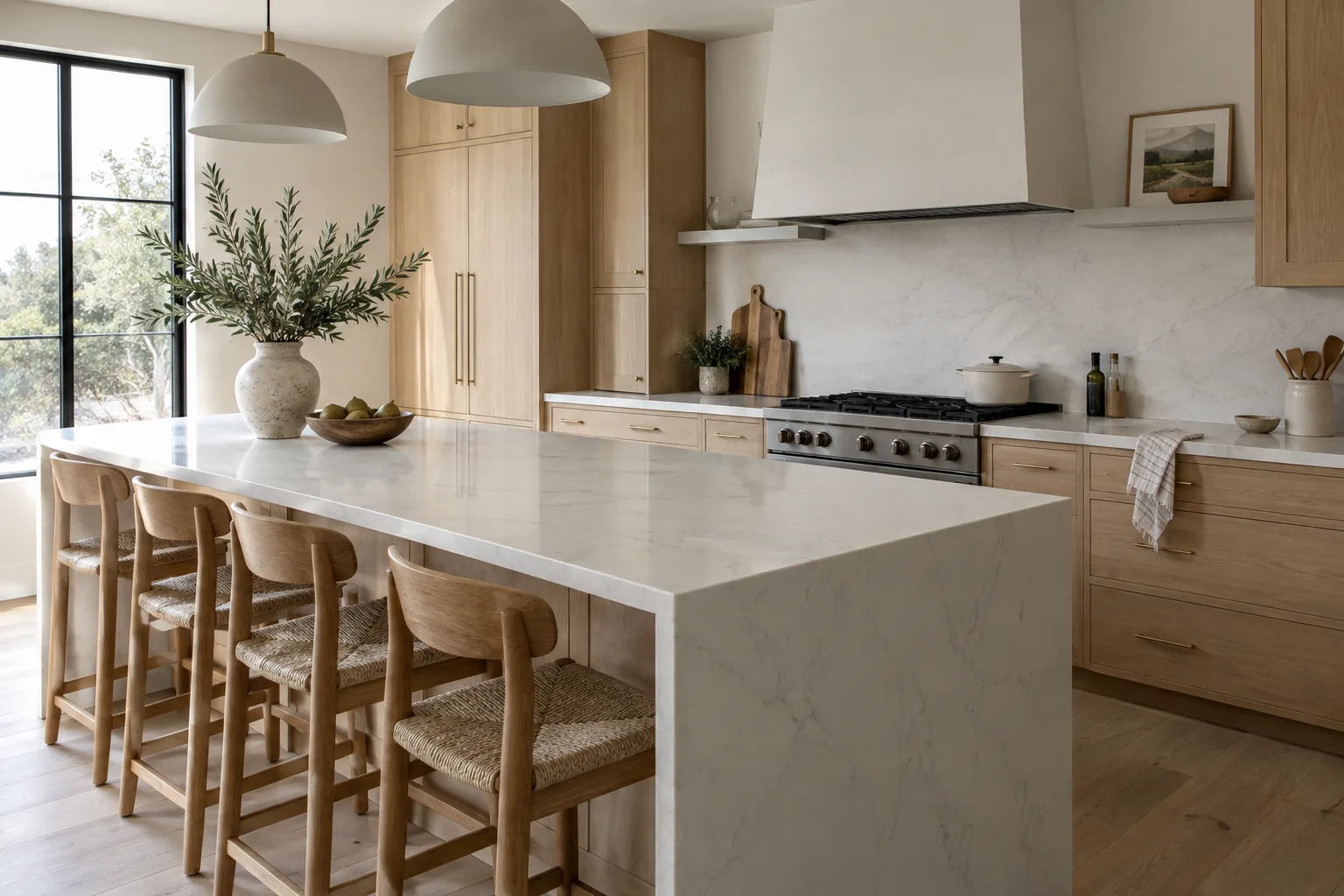
Penetrating sealer
A solvent or water-based product that soaks into the pores and cures below the surface, so the stone keeps its look and still breathes. It is our default for granite and marble.

Henderson Custom Countertops provides countertop sealing & polishing in Hendersonville, NC. We test how porous your stone is, apply a penetrating sealer where it helps, and bring dulled or etched surfaces back to an even finish on granite, marble, quartzite and soapstone.
Sealing slows how fast liquid soaks into natural stone, and polishing restores the surface gloss that daily wear dulls. They are two separate jobs, and a countertop may need one, both or neither. We start with a test on your actual stone instead of assuming, so you only pay for work the surface needs.
Our crew works on kitchens and bathrooms in Hendersonville, Flat Rock, Laurel Park and Mills River, using the same shop methods we use on new fabrication. If you have a stain you cannot lift, a ring where a glass sat, or a top that looks flat under the pendant lights, this is the page to read.
Why Henderson Custom Countertops
Whoever measures your cabinets is the person accountable for the finished top.
Granite, marble, travertine, soapstone and most quartzite are natural stone, and natural stone can take on liquid; engineered quartz and porcelain cannot, because resin or a sintered body closes the pores. That single fact decides most sealing questions before anyone opens a bottle.
Inside the natural group the differences are large. Dense granites and quartzites may refuse almost any liquid for years. Marble and limestone-type stones drink faster. Soapstone is the odd one: it is very dense and barely absorbs water, yet it darkens with oil, so owners often rub it with mineral oil rather than use a sealer at all.
Finish matters too. A honed surface has microscopic texture that holds on to a spill a little longer than a mirror-polished one, so honed marble tends to show marks sooner.
Here is how we sort a typical household:
If you do not know what you have, tell us the supplier or the year of install and we will identify it at the visit.
A puddle test shows porosity in about ten minutes of watching. We pour a small pool of water on a clean, dry area, then time how long the stone takes to darken. Quick darkening means open pores. No change after half an hour means the existing sealer, or the stone itself, is holding.
We repeat the test in two or three spots, because a counter does not wear evenly. The area around the sink and the strip in front of the range get the most abuse, and the sealer there is usually gone first. A far corner behind a toaster may still be fine.
For stones that resist water but stain with oil, we add a drop of cooking oil and look again after a few minutes. Some light granites pass the water test and fail the oil test, which is why a single test can mislead.
We also check for things sealing cannot fix:
After the tests we tell you plainly what the stone needs, in writing, before any product comes out of the van.
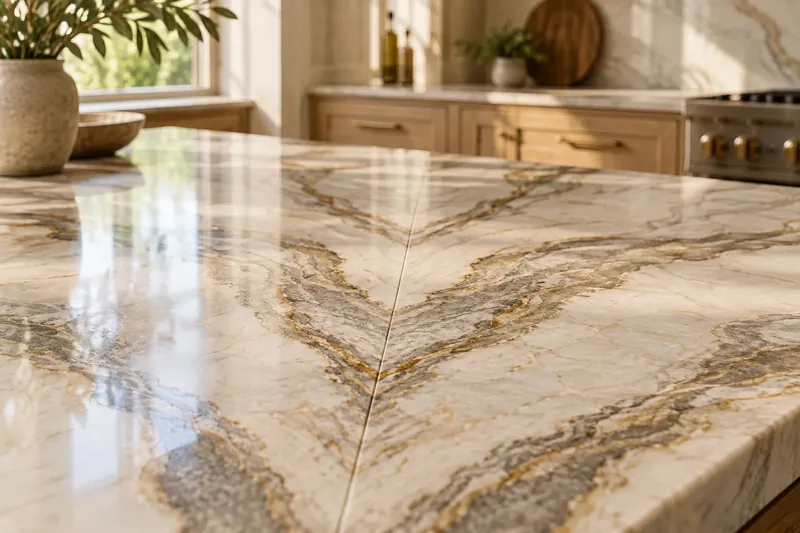
Most kitchens in Hendersonville land around $150 to $450 for a professional cleaning and sealing visit, and polishing or honing work runs higher because it takes hours of machine time. Those numbers are estimates; the written quote after we look at your stone sets the real figure.
Here is a rough guide to what we see, all as estimates:
Three things move the price the most. Condition comes first: a top with years of built-up film takes longer than one that simply needs a fresh coat. Size is second, since machine polishing is charged by area. The third is access, because a second-floor kitchen in a Laurel Park house with a narrow stair means more carrying of equipment.
Because these are estimates, we will not guess over the phone. We inspect the stone, run the test, and then put the work and the price on paper.
Polishing is done with diamond pads in steps, from coarse to very fine, and the order never changes. Each pad removes the scratch left by the one before it, and skipping a grit leaves visible swirls that only show once the light rakes across the stone.
On site we work wet when we can, which keeps dust down and cools the stone, then finish with a polishing compound chosen for the material. Marble responds to a different compound than granite, and a compound that shines one can haze the other.
The work follows a plain sequence:
One honest limit: polishing removes a thin layer, so a deep gouge or chip is a repair, not a polish. When we see one, we say so and price the repair separately instead of grinding the whole top to hide it.
A gloss that is too high is not always the goal. Many owners of honed or leathered stone want to keep that softer look, and we match what is already there rather than forcing a mirror shine on a matte surface.
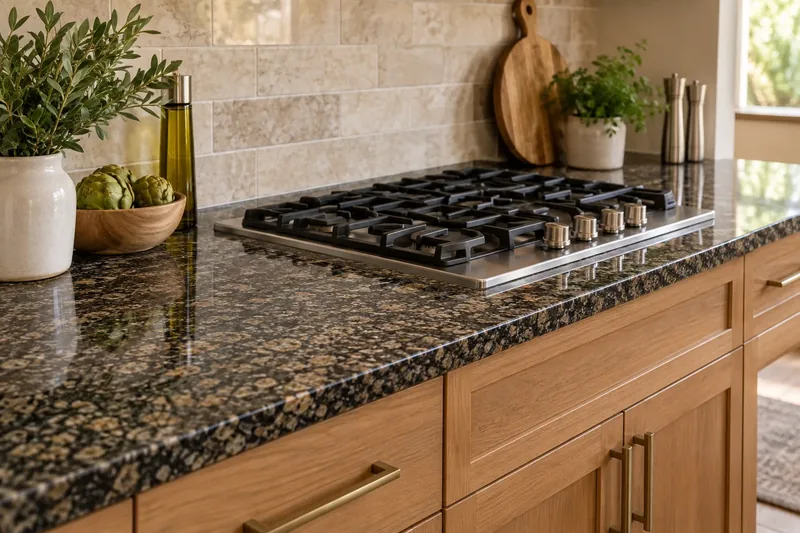
The right treatment depends on the stone and how you live with it. These are the main options we discuss at the visit.
A solvent or water-based product that soaks into the pores and cures below the surface, so the stone keeps its look and still breathes. It is our default for granite and marble.
For soapstone, a light coat of food-safe mineral oil evens the color and deepens it. It wears off, so owners reapply it on their own schedule.
A satin, low-sheen surface made by stopping the pad sequence early. It hides fingerprints and small scratches, and it suits busy family kitchens.
The full pad sequence, ending in compound, for a mirror gloss on granite and some marble. It shows the stone's color most strongly but also shows etching more.
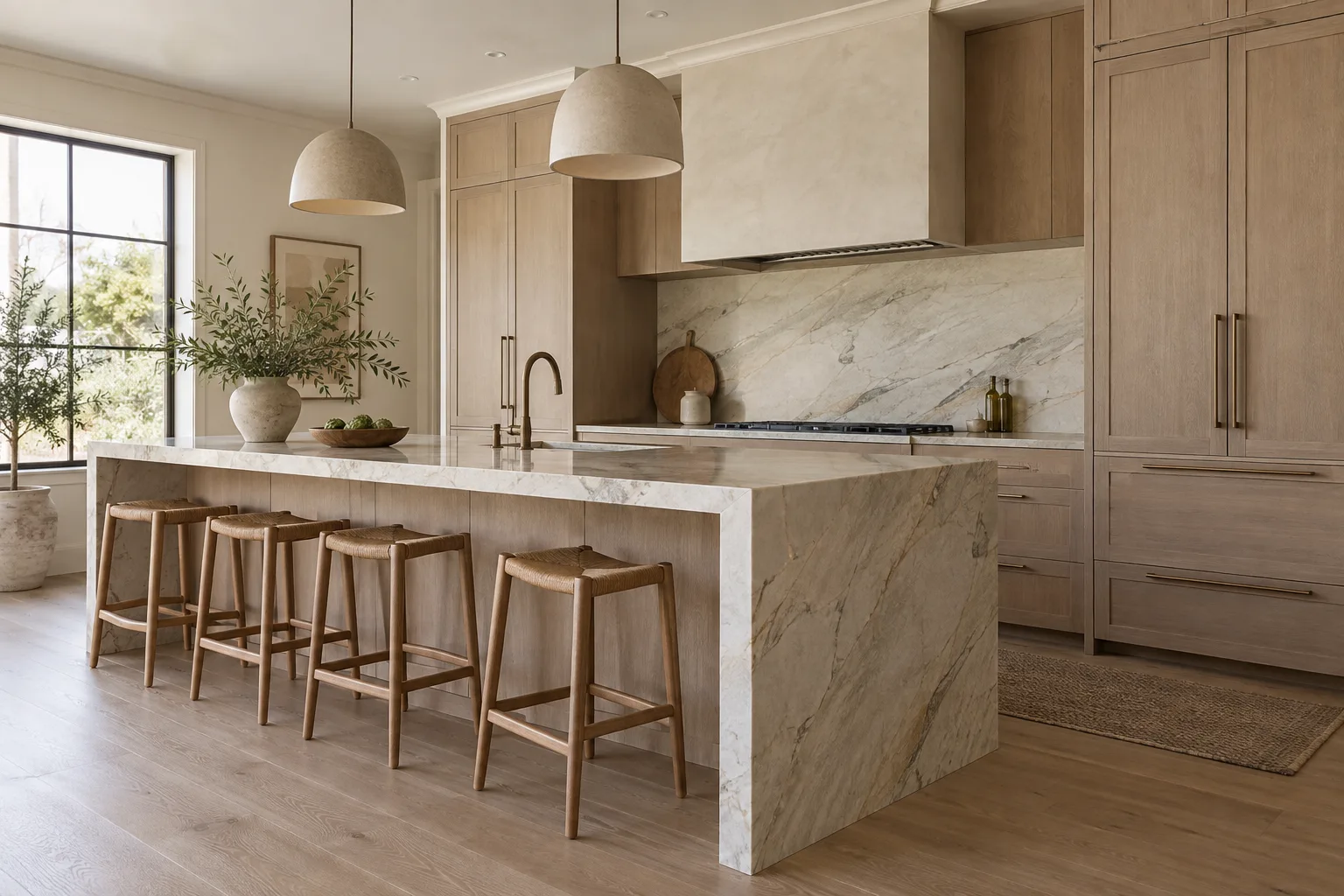
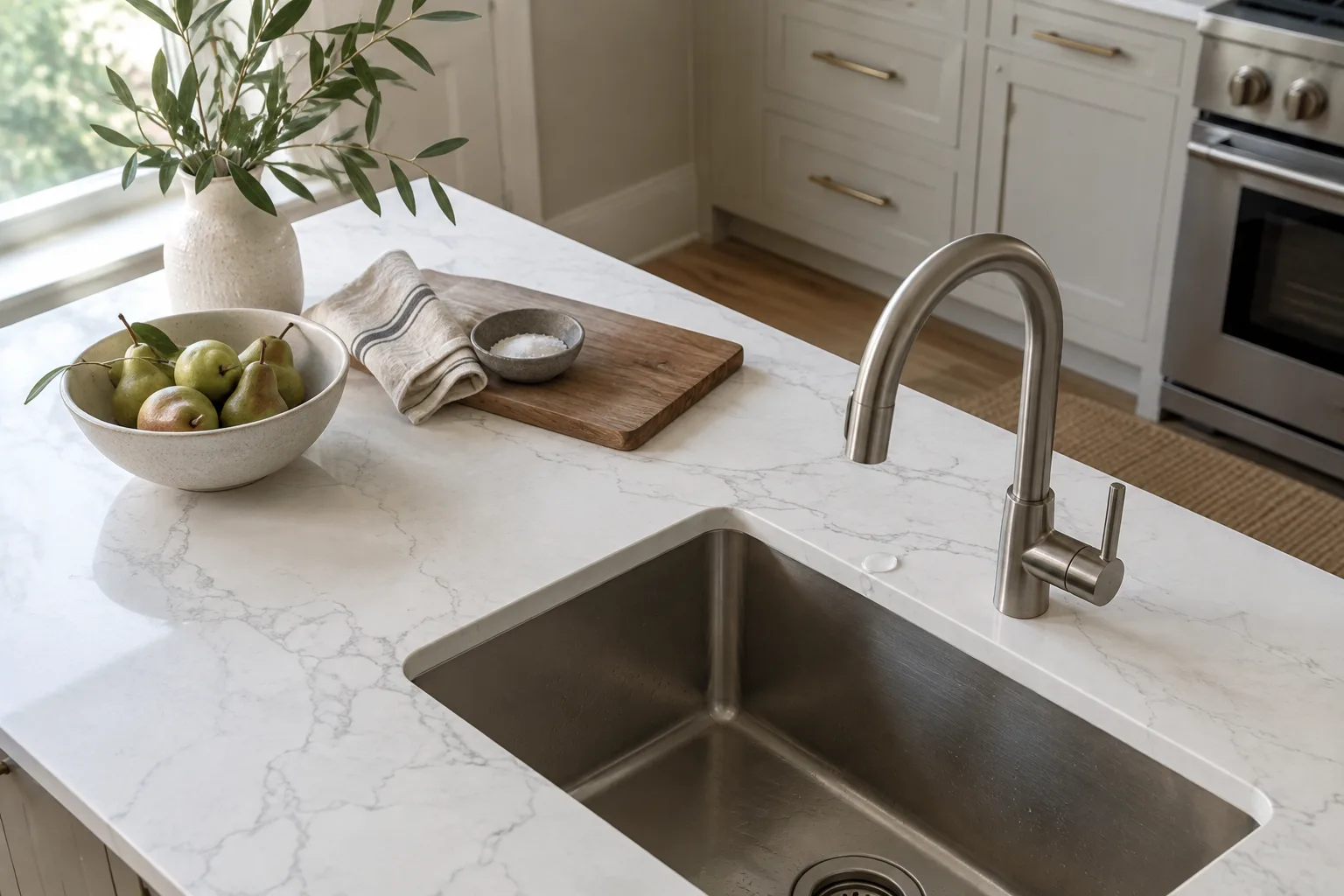
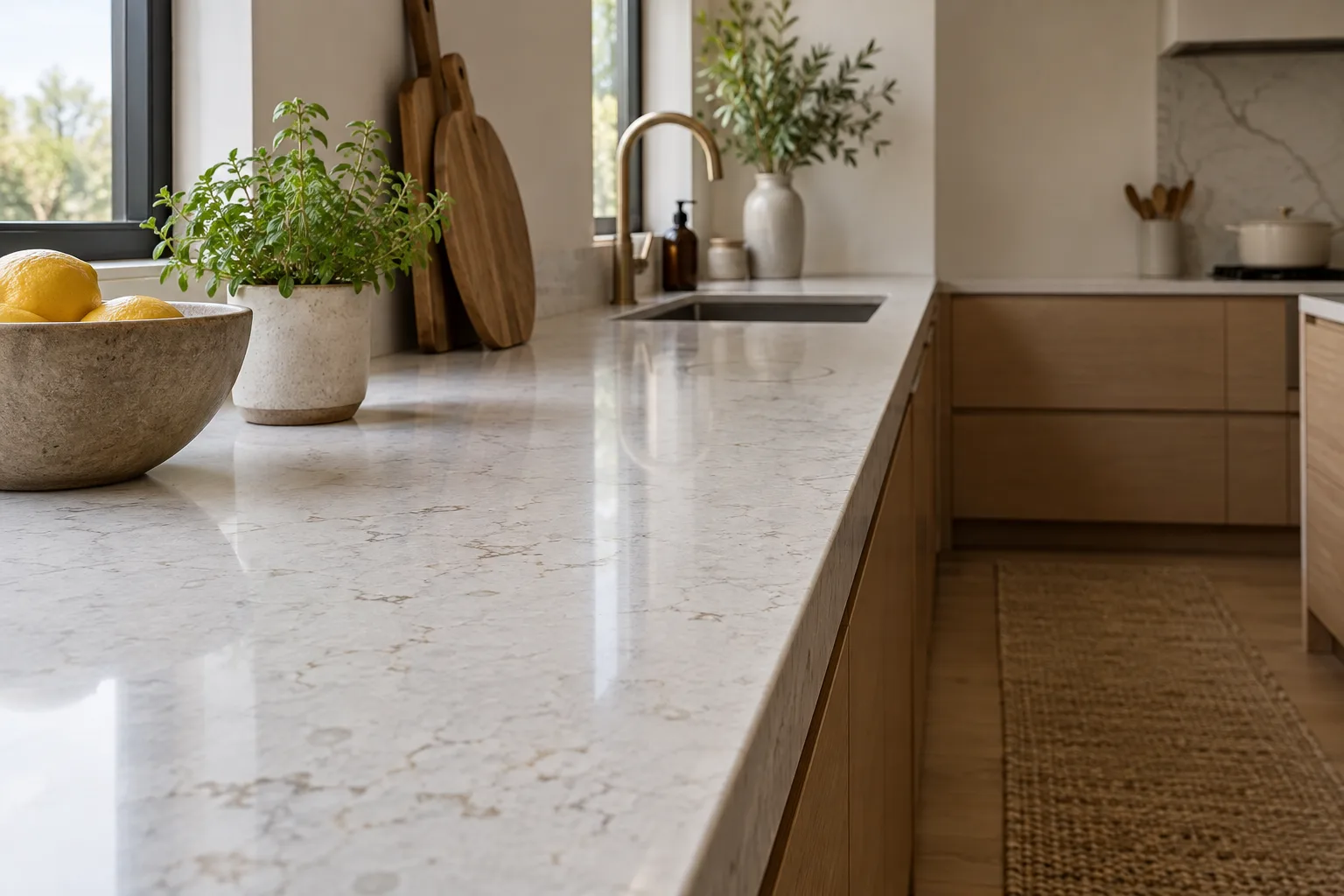
Start to finish
You will know what the stone needs before we start any work.
We look at the surface under raking light, run the water and oil tests, and note stains, etches and cracks.
You get a short list of what needs doing, what does not, and an estimate for each line.
We deep clean the stone, lift stains, then polish or hone where needed and let it dry fully.
We apply the sealer, wipe the excess, and tell you how long to wait before water touches it.
Straight answers
Run a water test. Pour a small puddle on the stone and watch it; if the spot darkens within about half an hour, the stone is absorbing and needs sealer. If the water beads and the color stays, the existing protection is fine.
No. Engineered quartz is made with resin that closes the pores, so a sealer has nothing to soak into. Using one can leave a film. Quartz needs regular cleaning, and we can refresh a dull one by hand.
It depends on the stone and its use. A dense granite may go years, while a porous marble near a sink may need a coat every year or two. The water test tells you when, which beats following a calendar.
Yes, in most cases. Etching is a surface burn from acid, and diamond pads with polishing compound remove it by refinishing the top layer. Deep damage is different and needs a repair.
A deep clean and seal on an average kitchen is typically estimated at about $150 to $450. Polishing and honing cost more, and the written quote after our visit sets the final number.
Light use is usually fine within a few hours, but we ask you to keep water off a freshly sealed surface for the cure time on the product label, often a full day. We tell you the exact window when we finish.
A penetrating sealer should not change the color or sheen much. Some enhancing sealers darken the stone on purpose, and we only use those if you ask. We test a hidden corner first when you are unsure.
Often, yes. We identify the stain type, whether oil, organic or metal, and draw it out with a poultice matched to it. Old stains can take more than one pass, and we explain the odds before we start.
We test, quote and work on countertops across Henderson County. Call or send your details and we will arrange a visit.
Licensed, bonded & insured. Calls only, we do not receive text messages.