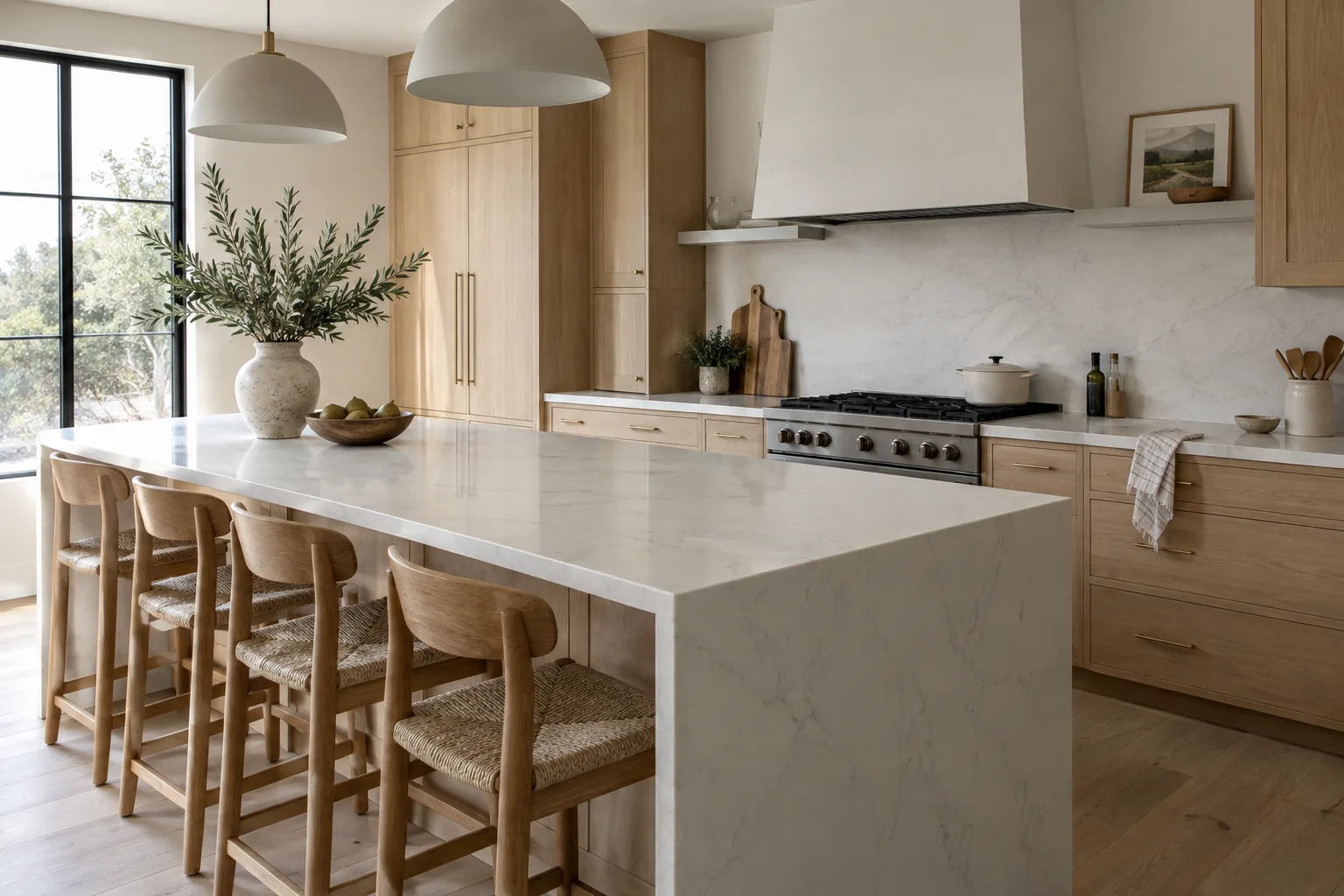
Polish and seal
For floors with light haze and a few faint etch marks. A fine-grit pass brings the shine back, and a sealer goes on afterwards. This is the fastest and least invasive option.

Henderson Custom Countertops offers marble floor resurfacing & refinishing in Hendersonville, NC, restoring dull, etched and scratched marble floors by grinding away a hair-thin layer, honing or polishing the fresh stone and sealing it. Foyers, kitchens, baths and living rooms across Henderson County are all fair game, and nothing has to be torn out.
A tired marble floor almost never needs to be replaced; it needs the damaged skin of the stone taken off. We assess the floor on site, tell you which finish suits the room, and work up through finer and finer diamond abrasives until the surface is even again. We get calls for foyers, baths and open living areas from Hendersonville to Mills River, and from Flat Rock to Laurel Park.
The same crew that fabricates and installs our stone countertops handles the floor work, so you get people who understand how calcite stone reacts to acid, water and foot traffic. You see the plan and the written scope before a machine is switched on.
Why Henderson Custom Countertops
Whoever measures your cabinets is the person accountable for the finished top.
A marble floor can be restored because the color and the veining run through the whole thickness of each tile, so there is no printed layer to wear off. When we grind the top, we are not stripping a finish; we are cutting away stone that has already been scarred, and the fresh stone beneath carries the same pattern.
Most of the dullness you see is chemistry. Marble is built from calcite, and calcite dissolves in mild acid. Orange juice, wine, a splash of vinegar-based cleaner or even the grit tracked in on shoes leaves a pale, dull patch called an etch. Those patches are damage to the polish, not stains, so wiping harder never helps. Scratches work the same way: grit dragged across a soft stone cuts fine lines that scatter light and make the floor look cloudy.
Restoration takes off that damaged layer, usually well under a millimetre for light wear and a little more for deep marks. The result is a flat, even surface that can be honed to a soft satin or polished to a mirror. Travertine and limestone floors respond the same way, which matters in older houses where one stone runs from the entry into the hall.
The work moves from coarse to fine in a fixed sequence, and skipping a step shows up later as swirl marks. We start with a walk-through of the floor, checking for lippage, cracks, hollow-sounding tiles and the condition of the grout lines, because those findings decide where the first pass begins.
A floor with raised tile edges or deep scratches begins with a coarse diamond pad that levels the surface. A floor that is only dull and lightly etched can skip that and start much finer. Each pass is done with water, which carries the dust off as slurry, and each grit exists only to erase the scratch pattern left by the one before it.
Here is how the finishes compare once the grinding is done:
Everything is done with diamonds and water. We do not rely on a spray-on coating or wax to fake a shine, because those layers wear through in the same lanes people walk and then peel.
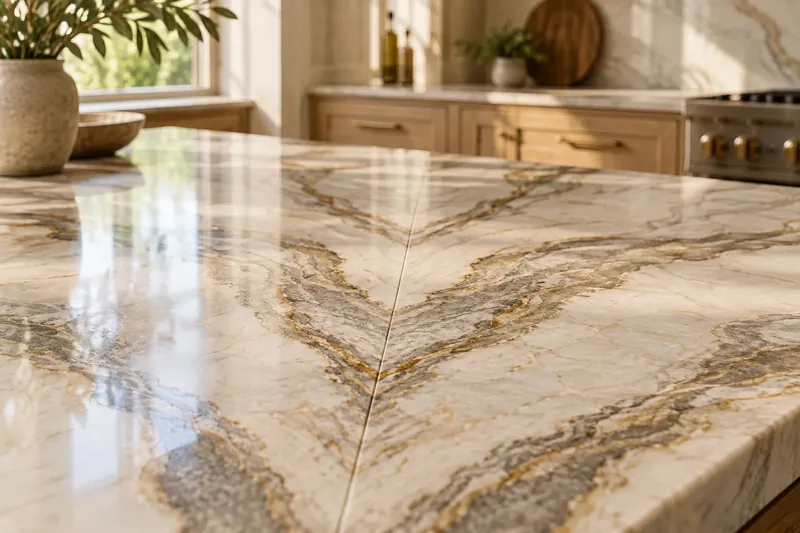
Marble floor refinishing in the Hendersonville area is typically estimated at roughly $3 to $6 per square foot for a polish and seal on a floor in fair shape, and $6 to $12 per square foot when a full grind, repairs and regrouting are needed. A 150 square foot entry and hall would usually land somewhere from $450 to $1,800 under those ranges, with the wide gap reflecting how different two floors of the same size can be.
The difference between the low and high ends comes down to a few things:
These numbers are estimates only. We look at the floor, measure it and check how much stone is left to work with, and the written quote after that visit sets the final price.
A restored marble floor should always be sealed, because a freshly honed surface is the most absorbent it will ever be. We apply a penetrating sealer that soaks into the stone instead of lying on top, so it blocks oil and water from reaching the pores without leaving a film that could scuff or yellow.
Sealer slows staining, but it does not stop acid etching, since the acid attacks the stone itself. That is why daily habits matter as much as the product. We hand you the short list before we leave.
If your kitchen counters are also marble, the same cleaning routine applies, and our team can seal and polish the countertops during the same visit.
Condition decides the plan, not the age of the floor. We match the process to what the stone is showing, so you do not pay for aggressive grinding when a polish is enough.
For floors with light haze and a few faint etch marks. A fine-grit pass brings the shine back, and a sealer goes on afterwards. This is the fastest and least invasive option.
For floors that carry traffic lanes and fine scratches. We work through several grits so the scratch pattern is replaced by an even finish.
For raised tile edges, deep scratches or an old uneven surface. A coarse diamond pass flattens the floor before the finer steps begin.
For chips, cracks and holes. A stone-tinted epoxy goes in, cures, and is ground level with the tile. We also explain when a crack comes from a moving subfloor and could return.
For grout that has crumbled or turned dark. We rake it out and set new grout before the finishing passes so the lines match the clean stone.
Start to finish
You get the finish choice and the scope in writing before any grinding starts.
We walk the floor, tap for hollow tiles, check lippage and the grout, and look at what the surface is showing under daylight.
You choose honed, satin or polished, and we write up the level of work, repairs and sealing line by line.
We work wet through the grits, repair chips and cracks along the way, and keep the slurry contained and hauled out.
A penetrating sealer goes on, we show you the care routine, and we go over the finished floor with you.
Straight answers
Yes, in most cases. The stone is solid all the way through, so grinding off a very thin top layer reveals fresh marble. Etches and light scratches disappear because the damaged surface is gone.
Usually by a wide margin, because you skip the jackhammer, the dumpster and the new tile order. Our rough estimate for the work runs $3 to $12 per square foot, and how worn the stone is moves it; the written quote after the assessment sets the real figure.
Honed suits busy and wet areas, since it hides etching and grips better. Polished suits formal rooms where you want the veining to glow. We can show both on a test area.
Yes, every time. A penetrating sealer slows oil and water stains. It cannot stop acid etching, so cleaning habits still matter.
Less than most people fear. Grinding is done wet, so little dust hangs in the air, and we collect the slurry as we go. The room is usable once the floor has dried and the sealer has cured.
Most can, though there is a ceiling on repeat work. If a floor has been ground several times already, the stone may be too thin for another pass, and a tile split by a shifting subfloor will keep splitting until the base underneath is addressed. We test thickness and look for movement first, then give you a number.
Yes. They are soft calcium stones like marble and respond to the same grinding, honing and sealing steps. Travertine holes are filled before the final passes.
We assess marble, travertine and limestone floors across Henderson County. Send a few photos or ask for a free visit.
Licensed, bonded & insured. Calls only, we do not receive text messages.