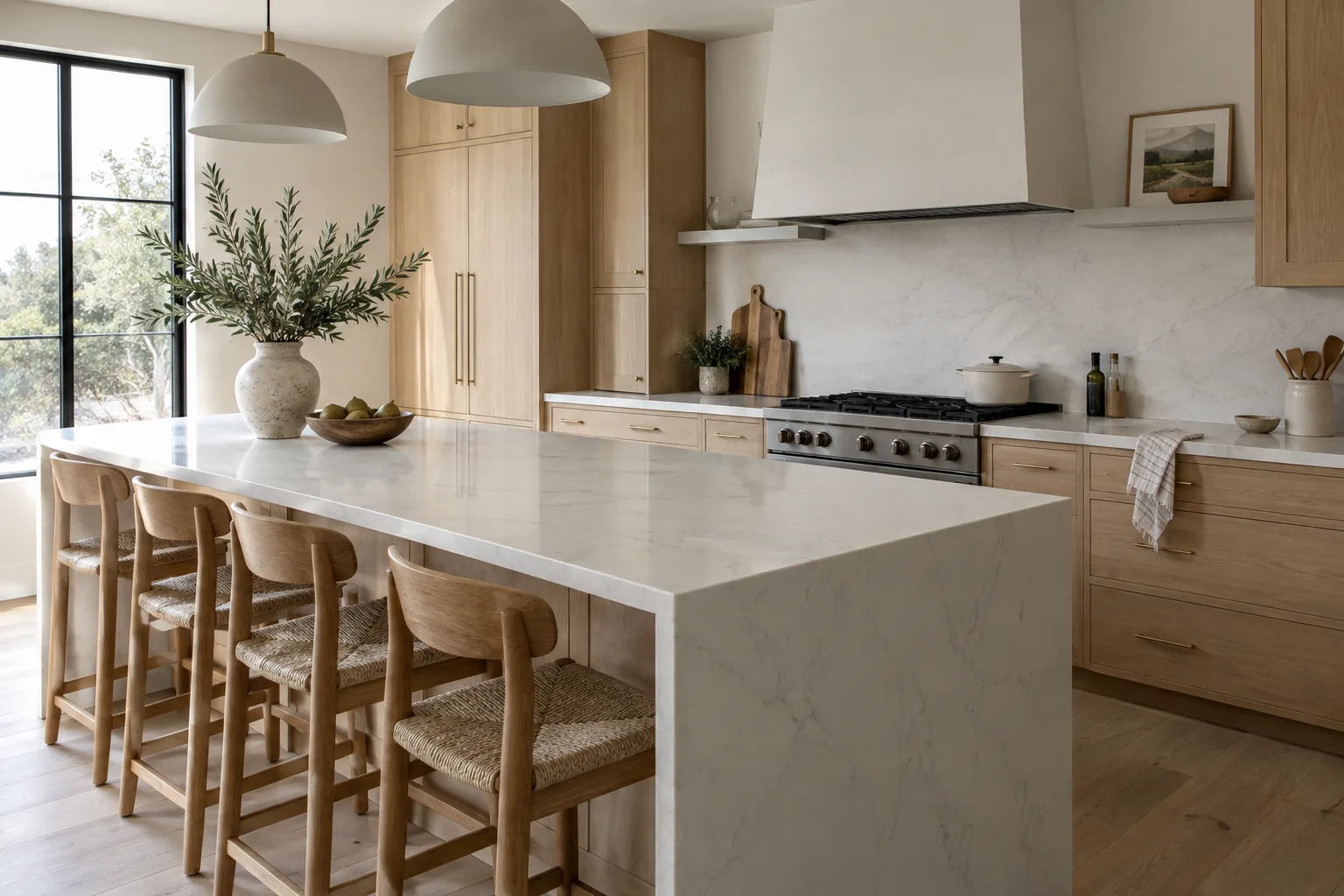
Eased edge
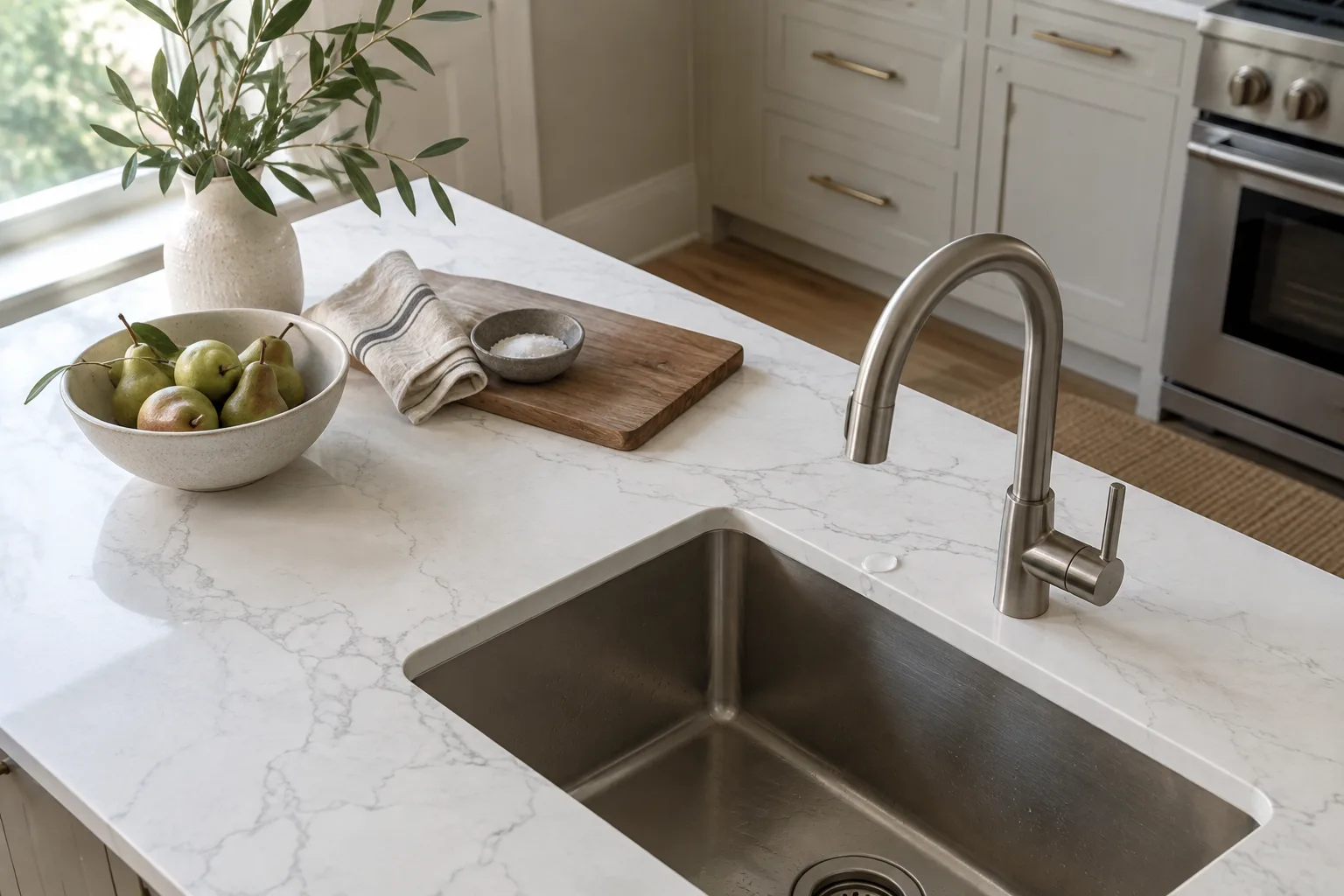
A square corner with the sharpness lightly rounded off, the cleanest look and usually the least shop time.

Henderson Custom Countertops handles countertop fabrication in Hendersonville, NC, cutting, edging and polishing for kitchens, vanities and bars. The crew that measures your cabinets is the crew that shapes the stone, so the top that arrives fits the room you actually have.
Fabrication is the step where a raw slab becomes a countertop, and it decides whether the finished top fits tight against the wall or leaves a gap you notice every day. ee shape stone from the layout you approved, working from the measurements we took ourselves, for homeowners, builders and cabinet shops alike.
Cutting, edge profiling, sink and cooktop openings and polishing all happen before the stone ever reaches your house. Our shop covers Hendersonville plus Flat Rock, Laurel Park and Mills River nearby, and every piece is planned so the best part of the slab lands where you will look most.
Why Henderson Custom Countertops
Whoever measures your cabinets is the person accountable for the finished top.
Countertop fabrication covers every cut, edge and polish between the slab yard and your cabinets. It is shop work, and it is where most of the quality in a stone top is made or lost.
A slab is a big, heavy, expensive sheet, usually somewhere near ten feet by five feet, with jumbo sizes running a little larger. Nobody can bring a whole slab into a kitchen and trim it on site. So the stone is turned into pieces in a shop: a perimeter run, an island, a peninsula, a vanity top, each cut to a template taken from your actual cabinets.
Fabrication includes more than the straight cuts. It also covers the inside corners with a small radius, the opening for a sink or cooktop, the shaped edge along the front, the matching backsplash strips, and the final polish that brings the surface to the sheen the material is meant to have.
Because the shop work is done before delivery, install day is short. The pieces have already been dry fitted against each other, checked for flatness and inspected under good light, so what comes off the truck is ready to set rather than ready to be argued over.
Stone is cut with diamond tooling and water, and the choice of machine depends on the shape of the piece. A bridge saw makes the long straight cuts, a waterjet or CNC router handles tight curves and complicated openings, and hand tools finish the places a machine cannot reach.
eater is not optional. Cutting wet keeps the blade cool and holds the fine stone dust down, which matters because quartz-rich materials throw off silica dust that you do not want in the air or in a shop worker's lungs. A wet shop is a safer shop, and it also gives a cleaner cut with less chipping along the edge.
The openings deserve their own attention. An undermount sink opening is cut to the exact bowl you chose, with the corners rounded to the radius the sink demands, because a sharp inside corner in stone is a stress point that can crack years later. ee cut cooktop and faucet openings from the specification sheets for your actual appliances, not from a guess.
Here is what we check on every piece before it leaves the shop:
Anything that fails a check is fixed or recut in the shop, where a mistake costs an hour instead of a ruined install day.
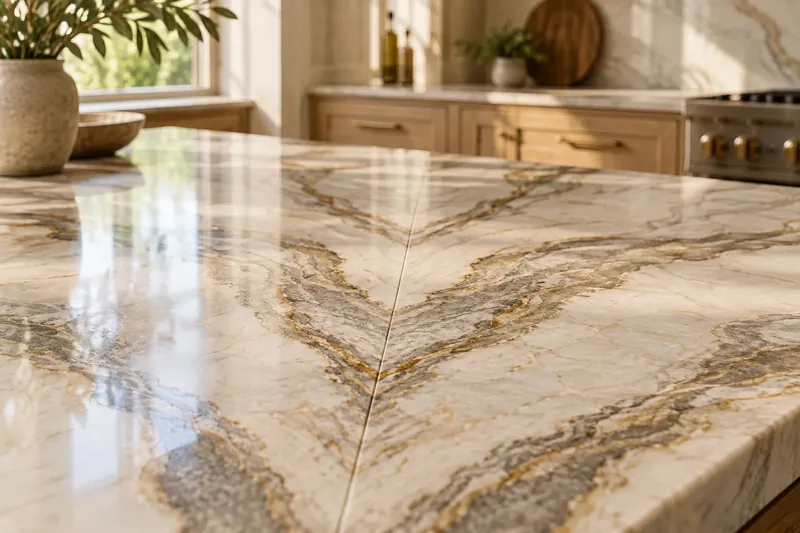
Fabrication and installation of stone you pick through us is typically estimated at roughly $45 to $110 per square foot, and the number climbs with the material, the edge and the count of openings. A basic quartz kitchen sits near the low end, and a thick mitered island in a rare slab sits near the top.
If you bring your own stone, the shop labor is priced separately. Fabrication alone, cutting and finishing a slab you bought elsewhere, is commonly estimated at roughly $30 to $65 per square foot, and we ask to see the slab before quoting because a damaged or flawed slab changes what is possible.
Every figure here is an estimate. The itemized written quote that follows your free no-cost measure fixes the final price, line by line.
A seam is needed whenever the counter is longer or wider than one slab can supply, and a good fabricator decides where it goes before the first cut. Most kitchens need at least one seam, usually on an L-shaped run or a long wall of cabinets.
The best seam locations are the ones that carry the least stress and draw the least attention. A joint near the sink is common because the pieces are small and supported by the cabinet frame, and an inside corner hides a seam in the shadow of the turn. ee try to keep a seam away from the middle of a cooktop opening and away from an unsupported span.
On a heavily veined stone, the pattern matters as much as the position. ee lay the pieces out on the slab so the veins continue across the joint, and we keep the offcut next to the piece it came from. Color-matched epoxy fills the gap, and the joint is pressed tight enough to read as a thin line rather than a gap.
You see the layout before we cut. ee mark the proposed seams on the tagged slab, you walk the plan against your cabinets, and nothing is sawn until you say yes.
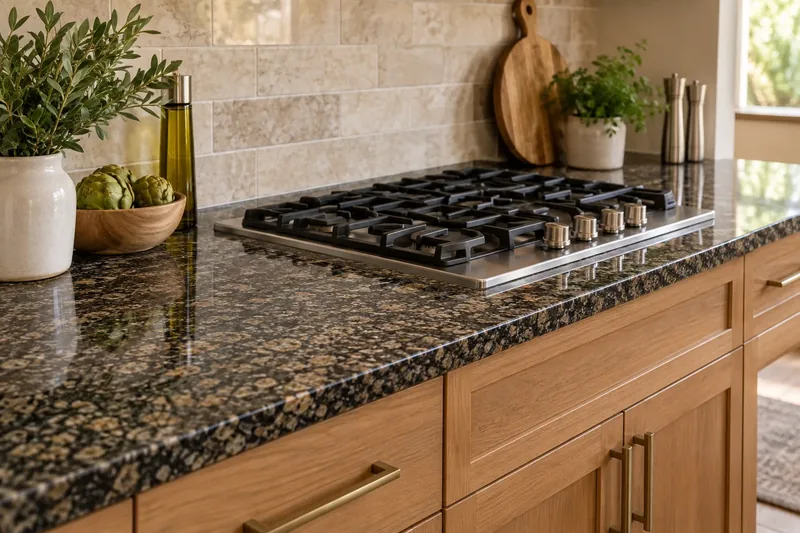
The edge is the part of the counter your hand and your eye meet most, so we show real samples at the measure. Hard stone holds a profile crisply, while softer stone needs gentler routing.
A square corner with the sharpness lightly rounded off, the cleanest look and usually the least shop time.
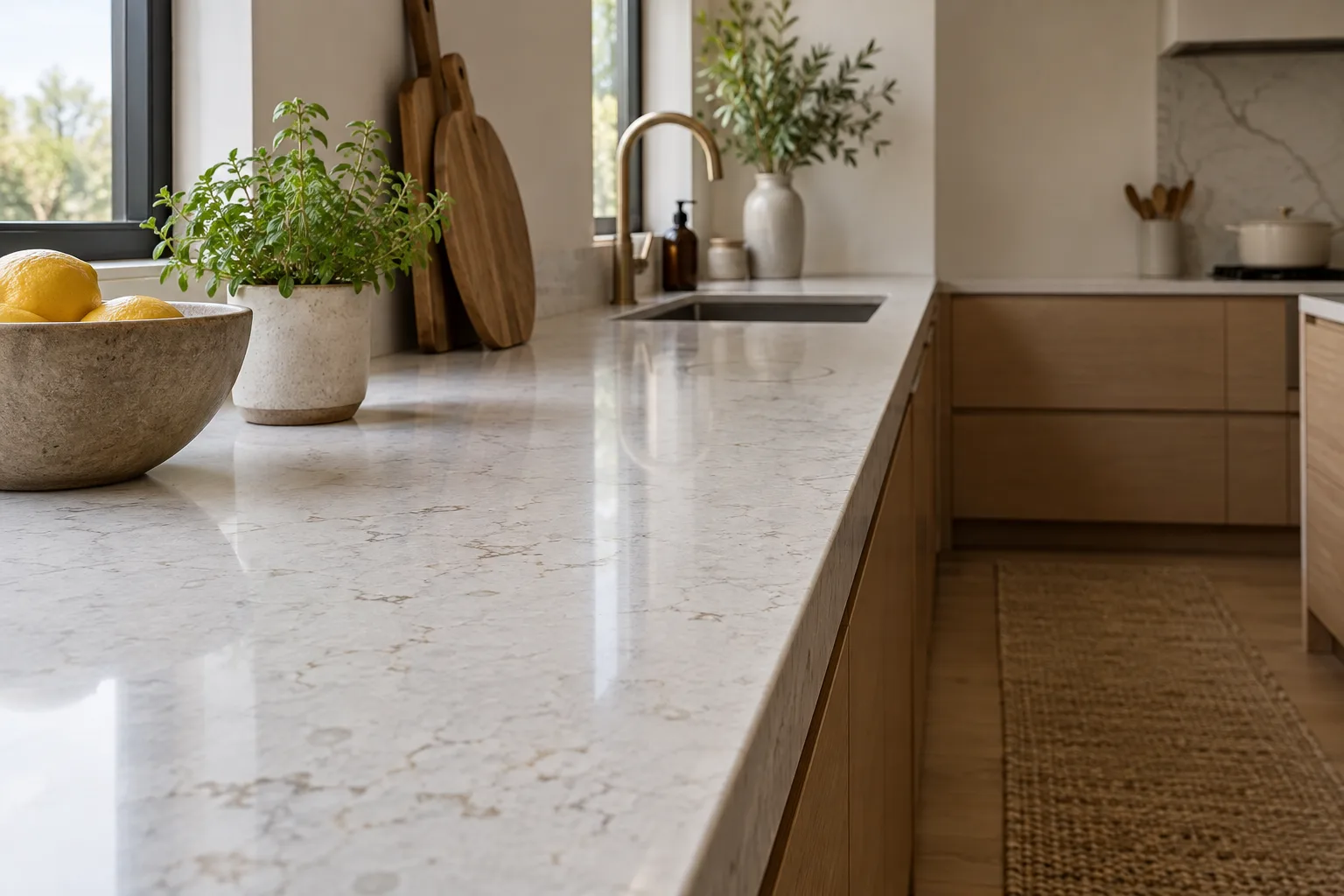
The top corner is rounded while the lower edge stays square, giving a soft feel that is easy to wipe.
A flat angled cut along the top edge, a crisp line that suits contemporary cabinets.
A layered S-curve that adds detail to traditional kitchens and the older houses in Hendersonville and Flat Rock.
A second strip is joined under the top, so a slimmer slab looks like a heavy block of stone at the front.
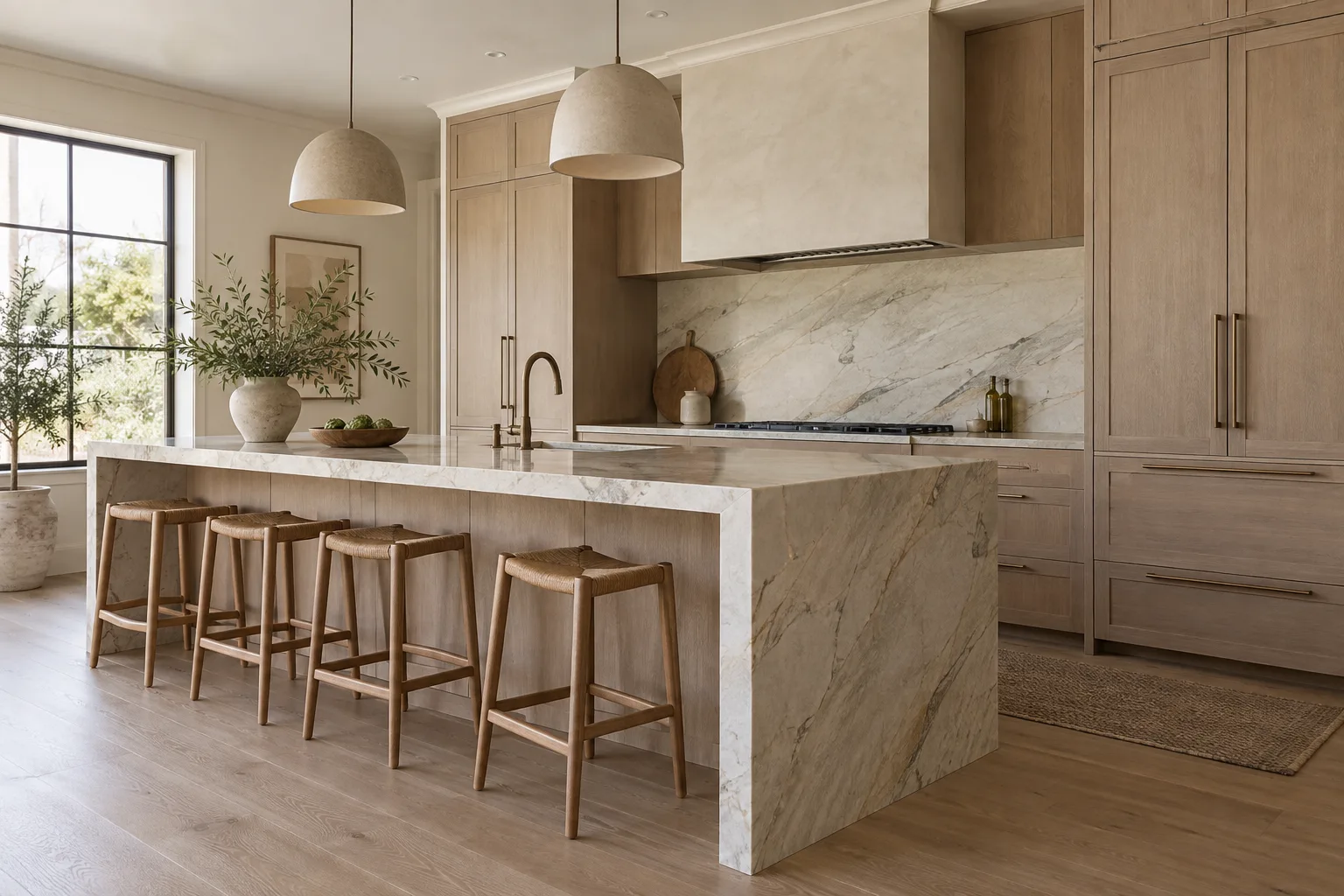
The surface turns ninety degrees and runs down the side of an island, with the vein matched around the corner.
Start to finish
Every piece has a checkpoint before it is cut and another before it ships.
ee measure the cabinets, confirm the sink and cooktop models, and record every overhang and corner.
The tagged slab is laid out on paper first, so the veining and seams are approved before any cutting.
Bridge saw and router work the pieces wet, then the openings and edge profile are finished by hand.
Pieces are polished, dry fitted against one another, and checked for flatness before they ship.
Straight answers
It means turning a slab into finished countertop pieces in a shop. That includes cutting to your template, shaping the edge, cutting the sink and cooktop openings, and polishing the surface before it is delivered.
Plan on roughly one to two weeks, and it varies with the material, the shop queue and slab availability. ee give you a schedule with the written quote and tell you right away if a slab is backordered.
Yes, after we inspect it. ee look for cracks, repaired fissures and flatness first, because a flawed slab can fail during cutting. Shop labor for customer-supplied stone is quoted separately and is only an estimate until we see the slab.
Yes. ee mark the proposed seams on the tagged slab and you approve them before we cut. A seam that lands somewhere you did not expect is the one thing we work hardest to avoid.
ee fabricate granite, quartz, quartzite, marble, soapstone and porcelain slab. Each cuts differently, so the blades, speeds and polishing steps change with the stone.
Fabrication with installation is typically estimated at roughly $45 to $110 per square foot, depending on material, edge and cutouts. Your itemized quote, written after the free measure, fixes the final number.
Yes. Strips, sills and shower curbs can be cut from the same slab in the same run, so the color and veining carry through the room.
It will if the template records the real wall. Cabinets and walls are rarely square, so we scribe the back edge to the wall where needed and leave a small, even joint that caulk finishes cleanly.
We measure homes and businesses across Henderson County. Builders and businesses can send drawings for a bid.
Licensed, bonded & insured. Calls only, we do not receive text messages.